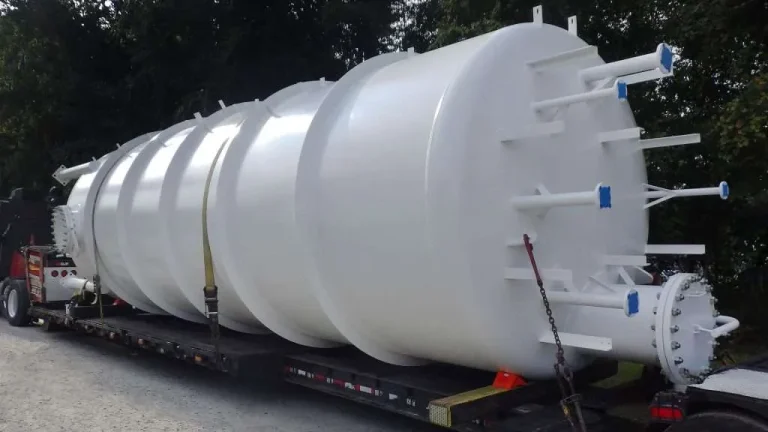
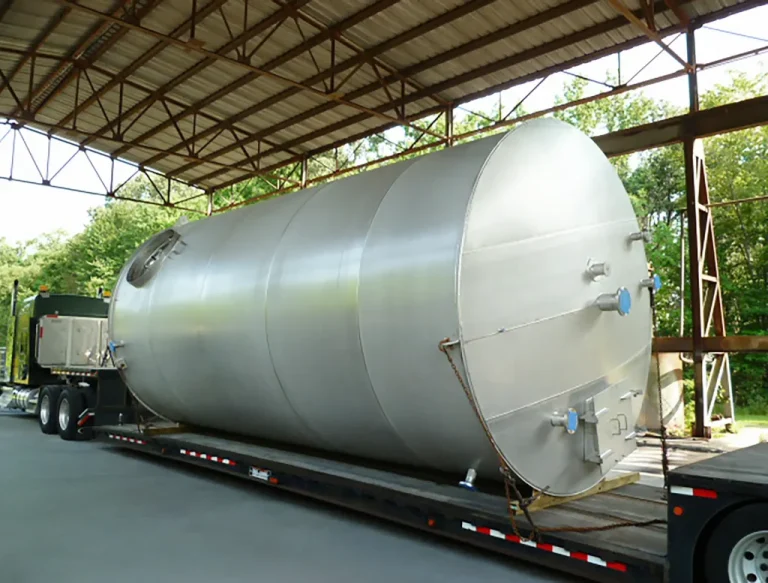
In every industrial operation, equipment decisions influence safety, compliance, and long-term operating costs. One of the most common challenges engineers face is determining whether a pressure vessel or an atmospheric storage tank is the right solution for their process.
While both store liquids or gases, the two are engineered very differently. Choosing the wrong equipment can create compliance issues, safety risks, and lead to preventable maintenance costs. That’s why companies across the U.S. rely on experienced pressure vessel manufacturers and tank manufacturers who understand the engineering behind both systems.
What Sets Pressure Vessels Apart from Atmospheric Storage Tanks?
Although they may look similar from the outside, pressure vessels and storage tanks serve different purposes.
Pressure Vessels
A pressure vessel is designed to safely contain gases or liquids at pressures significantly above or below atmospheric pressure conditions. In the U.S., these units must be engineered and fabricated in accordance with ASME Section VIII, Division 1, which regulates vessel design, material selection, stress calculations, weld quality, and inspection procedures.
Atmospheric Storage Tanks
An atmospheric storage tank holds liquids at or near ambient pressure. These tanks follow standards such as API 650 or API 620 and are commonly used for volume storage rather than pressure containment.
This core difference drives everything from shape and thickness to welding approach and testing requirements.
Key Engineering and Design Differences
| Category | Pressure Vessels | Atmospheric Storage Tanks |
| Operating Pressure | Operate under internal or external pressure | Operate at or near atmospheric pressure |
| Design Standards | ASME Section VIII, Division 1 | API 650 or API 620 |
| Structural Design | Detailed design calculations determine material thickness and overall construction. ASME requires higher safety factors and mandates third-party inspection at defined points during fabrication. | Detailed design calculations are also performed, and large storage tanks can be complex. API standards are less demanding due to lower operating pressures and do not require third-party inspection. Both ASME and API codes establish minimum standards for safe, reliable service. |
| Fabrication & Testing | Uses qualified welding procedures per ASME Section IX, with in-process and third-party authorized inspection. Pressure testing is performed to verify mechanical integrity, and the test is witnessed and certified by an authorized inspector. | Built to API standards with visual and dimensional inspections. Tanks are also pressure tested to confirm integrity, but at lower pressures consistent with their operating conditions. Third-party inspection is not required. |
Applications Across Industries
Due to the increased potential risk associated with pressure vessels, they are subject to higher engineering design and manufacturing standards than other types of equipment.
Pressure vessels and atmospheric storage tanks are used across a wide range of industries, including:
- Chemical processing and reaction systems
- Energy and oil & gas operations
- Water and wastewater treatment
- Food and beverage processing
- Bulk liquid and industrial material storage
The difference lies in their application within these operations:
- Pressure vessels are used where internal or external pressure is required, such as in compressed gas storage, high-pressure liquid systems, and heat exchangers.
- Atmospheric storage tanks are used for storage, mixing, or blending applications where pressure is not a factor.
Understanding the differences between these types of systems will help you design one that operates reliably under realistic conditions.
Why Work With an Experienced Pressure Vessel Manufacturer?
Selecting the right equipment is only part of the equation. The performance of both pressure vessels and storage tanks depends heavily on the manufacturer’s expertise.
Savannah Tank takes a consultative, engineering-driven approach to every project. From the initial conversation, our team works with you to understand process conditions, evaluate design options, and optimize your equipment for performance, cost, and manufacturability.
Customers choose Savannah Tank because we deliver:
- Proactive design support: Collaborative guidance through every stage, from quoting to final fabrication.
- Decades of experience: Decades of ASME-certified expertise in designing and building both pressure vessels and storage tanks.
- Exceptional quality: A finished product that reflects our commitment to total quality and craftsmanship.
- Prompt response: Responsive communication, including status updates, during the production of our products.
- Delivery on time: All products are delivered on schedule with documented quality assurance.
With fabrication facilities in Georgia and India, we offer increased capacity, greater project flexibility, and consistent quality across all manufacturing locations.
Conclusion: Choosing the Right Solution for Your Application
Atmospheric storage tanks and pressure vessels serve very different purposes, so you need to first clarify your process conditions and performance needs before determining which type of storage vessel will meet your requirements.
Savannah Tank builds custom-engineered solutions designed around your application — not just standard specifications.
If you are evaluating a new project or refining an existing design, contact Savannah Tank to discuss your requirements and develop a solution engineered for safety, performance, and on-time delivery.