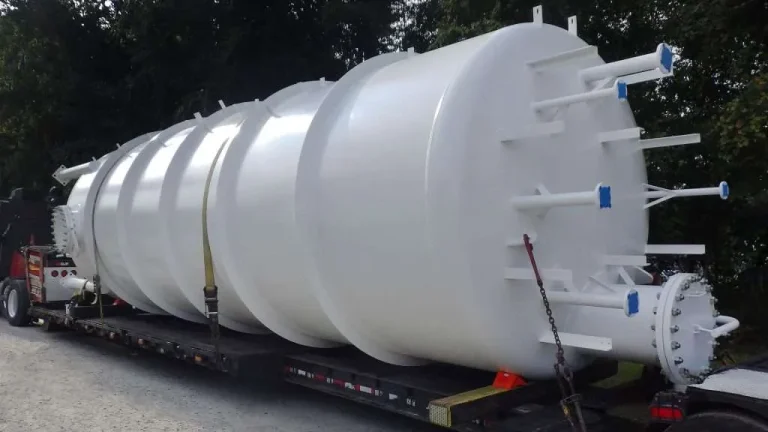
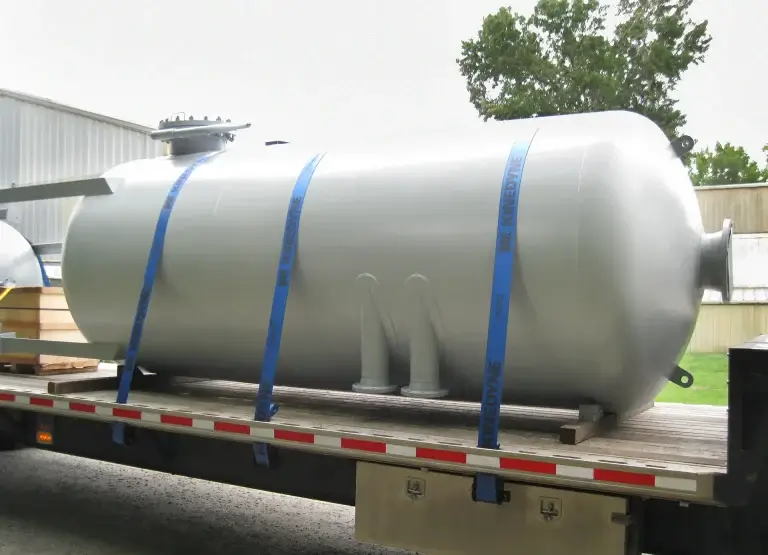
In industrial environments, the storage system you choose has an immediate impact on safety, reliability, and long-term operating costs. Companies evaluating new storage equipment often ask a critical question: How do atmospheric storage tanks differ from other tank designs, and what safety factors should be considered before putting them into service?
At Savannah Tank, we support plant operators, engineers, and EPC firms by providing storage solutions designed for specific process requirements and applicable industry standards.
Where Atmospheric Storage Tanks Are Used
Atmospheric storage tanks are designed to store liquids or other bulk materials at or near atmospheric pressure. Unlike pressure vessels, which are engineered to contain significant internal or external pressure, atmospheric tanks are primarily intended for bulk storage, process holding, blending, and utility applications where pressure containment is not the primary design requirement. These tanks are commonly used for:
- Water and wastewater treatment
- Chemical storage and handling
- Food and beverage processing
- Agricultural chemicals and fertilizers
- Pharmaceutical and specialty chemical applications
- General industrial liquid storage
Savannah Tank designs and fabricates carbon steel and stainless steel storage tanks to meet these specialized requirements, backed by decades of U.S. tank manufacturing experience.
What Makes an Atmospheric Storage Tank Different?
Although all tanks store liquids, atmospheric storage tanks operate under a specific condition: they hold product at or near ambient pressure. That fundamental difference drives major differences in design, fabrication, and performance when compared to other tank types.
- Operating Pressure
Atmospheric storage tanks are designed for operation near atmospheric pressure. They are not intended to withstand significant internal or external pressure.
Pressure vessels, by contrast, are designed to safely contain internal pressures above atmospheric conditions and therefore may require thicker walls and are subject to more stringent design criteria.
- Design Codes
In the U.S., storage tanks are commonly designed in accordance with standards provided by the American Petroleum Institute (API). Atmospheric storage tanks are typically built to API 650 standards, while certain low-pressure storage applications may fall under API 620 requirements. Pressure vessels designed for elevated internal or external pressure service are typically fabricated in accordance with standards set by the American Society of Mechanical Engineers (ASME) under Section VIII, Division 1 of their Boiler and Pressure Vessel Code. Selecting the appropriate design code depends on the specific operating conditions and project requirements. Companies turn to Savannah Tank for both tank manufacturing in the US and international fabrication support because we engineer each vessel for its specific design conditions and regulatory environment.
- Material Selection
We offer production in various types of steel, including carbon steel, stainless steel, and specialty alloys, that can withstand various environmental and working conditions, resist corrosion, and be compatible with a wide variety of media.
- Geometry and Storage Capacity
Because atmospheric storage tanks are not subject to high-pressure design requirements, they can be constructed with larger diameters and higher storage capacities than pressure vessels.
They are widely used for bulk liquid storage where large volume containment is required without pressurization.
Safety Considerations When Using Atmospheric Storage Tanks
Although atmospheric tanks are designed to operate at or near atmospheric pressure, they still require the same attention to safety, inspection, and operational controls as other critical process equipment.
- Vent sizing & Pressure Relief
Although atmospheric storage tanks are designed to operate at or near atmospheric pressure, pressure fluctuations can occur during filling, emptying, and temperature changes. Proper venting is essential to safely manage these conditions.
Without adequate venting, a tank may experience:
- Overpressure during filling operations
- Vacuum conditions during draining operations
- Shell or roof deformation
- Operational disruptions or product loss
Appropriately sized venting and pressure/vacuum relief systems help maintain safe operating conditions and support reliable tank performance.
- Chemical Compatibility of Materials
The tank material must be compatible with the stored product to avoid corrosion, contamination, or degradation over time.
This includes evaluating:
- Corrosive potential of stored fluids
- Temperature effects on material performance
- Product purity requirements
- Cleaning and maintenance procedures
- Foundation and Supporting Structures
A large-diameter atmospheric tank places a heavy load on its foundation. The foundation must be properly designed to avoid settlement, shell distortion, or weld cracking over time.
- Inspection and Maintenance Practices
Regular inspection and maintenance are essential to ensure long-term performance and safety. Key practices include:
- Conducting regular inspections of tank walls, weld seams, and areas prone to corrosion
- Inspecting the exterior coatings or internal linings of tanks
- Monitoring for leaks and addressing any potential issues before they affect operations
Every Savannah Tank vessel undergoes documented inspections, dimensional verification, weld testing, and final cleaning before shipment.
Why Companies Choose Savannah Tank
Customers across the industrial sector trust Savannah Tank because we deliver more than products — we deliver engineered solutions. Companies choose us for:
- Proactive design support from concept through final fabrication
- Decades of experience designing and fabricating ASME vessels, atmospheric tanks, and custom modular systems
- Responsiveness and clear communication at every stage
- On-time delivery aligned with critical project schedules
- True customization built to the customer’s exact specifications
- Dual manufacturing capability that increases capacity and flexibility
Every tank we build reflects our commitment to quality, craftsmanship, customer satisfaction, and long-term performance.
Conclusion — Build the Right Storage System for Your Application
Atmospheric storage tanks play a vital role in industrial operations. They perform best when engineered for the specific conditions of your process, your facility’s safety requirements, and its long-term performance goals.
If you need guidance selecting the right tank—or require a custom-fabricated solution built to the highest standards, Savannah Tank is ready to support your project from the first conversation through final delivery.
Contact our team to discuss your requirements and get a customized solution engineered for reliability, safety, and long-term value.